Darya Shipilova:
what happened?
News outlets identified Darya Shipilova (some outlets spell her Daria), 28, as the Irkutsk laboratory worker whose death on 2 October 2026 prompted a suspected-plague investigation. WHO’s 10 October update left the cause of her illness undetermined.
View her portrait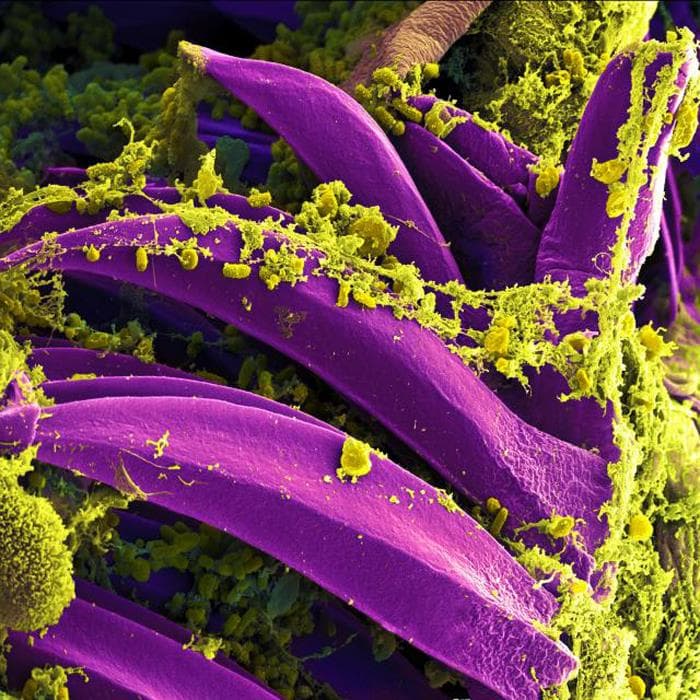
Yellow bacteria inside a flea · Reference micrograph
NIAID / CDC ↗How the investigation unfolded.
Death reported
The death of the 28-year-old laboratory worker triggered a precautionary response.
Reuters · 8 October ↗WHO asks for answers
The agency requested testing details and information about approximately 200 quarantined contacts.
WHO · 7 October ↗Contact monitoring ends
Russia reported completion of medical observation for identified contacts.
WHO · 10 October ↗
Who was Darya Shipilova?
She was the 28-year-old laboratory employee identified by news outlets following the death of a worker at the Irkutsk Anti-Plague Research Institute. Her name also appears as Daria Shipilova: these are alternative English spellings of Дарья Шипилова.
Associated Press · 8 October 2026 ↗What is the Irkutsk Anti-Plague Research Institute?
It is a research and epidemic-control institution in Irkutsk, Siberia. Established in 1934 for plague control, its work later expanded to infections including cholera, anthrax, brucellosis and tularemia. The institute describes a role in disease surveillance, research and specialist training across Siberia and the Russian Far East.
- Established: 5 June 1934.
- Published address: 78 Trilisser Street, Irkutsk.
Did she die of plague—or pneumonia?
Pneumonia describes an infection in the lungs; plague names a disease caused by a particular bacterium. They are not mutually exclusive descriptions: plague can cause pneumonia, but many other infections can too. Calling an illness pneumonia therefore does not identify the organism responsible. CDC notes that clinicians sometimes cannot establish which germ caused a patient’s pneumonia.
CDC · About pneumonia · 25 February 2026 ↗Why did the story become a plague scare?
The workplace, the severe lung illness and the rapid precautionary response drew attention at the same time. In its 7 October briefing, WHO described media allegations of accidental laboratory exposure and Russia’s report that about 200 contacts had been quarantined. WHO asked for the test results and an explanation of the response.
WHO · Media briefing · 7 October 2026 ↗What would establish a diagnosis?
The useful evidence is a documented result tied to the patient, the specimen and the testing method. CDC’s clinical guidance describes testing appropriate samples and confirming the organism. Negative plague tests do not identify an alternative cause.
- Which specimen was tested, and when was it collected?
- Which organisms and methods were included?
- Were results confirmed by a reference laboratory?
- How do the laboratory findings fit the clinical history?
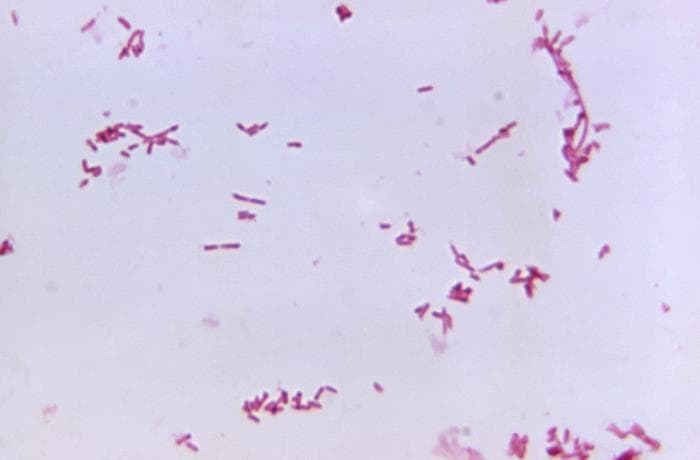
1125× magnification · Reference micrograph, 1966
CDC / Dr D.S. Martin ↗Does quarantine mean those people were infected?
No. Quarantine and medical observation are precautionary measures for contacts; they are not case counts. WHO’s 7 October briefing relayed Russia’s figure of about 200 quarantined contacts.
WHO · Media briefing · 7 October 2026 ↗Is the Russian plague a new virus?
No: plague is caused by Yersinia pestis, a bacterium. Bubonic, septicaemic and pneumonic plague describe different clinical forms of the same bacterial disease. The word ‘Russian’ here identifies the location of the investigation, not a newly named pathogen.
WHO · Plague fact sheet ↗How would pneumonic plague spread?
CDC identifies close exposure to infectious respiratory droplets from a person or animal with pneumonic plague as a route of transmission. Other routes of plague infection include infected flea bites and contact with infected animal tissues.
CDC · How plague spreads ↗What symptoms explain the concern about the lungs?
Pneumonic plague can involve fever, weakness, cough, chest pain and shortness of breath, with rapidly developing pneumonia. Symptoms overlap with other lung infections. CDC advises immediate medical attention for symptoms suggesting plague, particularly when there is a relevant exposure.
CDC · Signs and symptoms ↗What would actually move this story forward?
The next major development would be a diagnosis, an exposure finding or a linked illness. These are the findings to watch:
- Diagnosis: a named causative organism and the evidence behind it.
- Exposure: records establishing where and how infection occurred.
- Contacts: dated follow-up findings, with suspected and confirmed illness separated.
- Corrections: an explicit account of which earlier claims changed.
The theories.
The evidence each would need.
A laboratory-associated exposure
The workplace makes occupational exposure a relevant line of inquiry. WHO said it could not fully exclude it; Russia reported that its investigations found no laboratory incident.
Evidence needed
An exposure record supported by clinical and laboratory findings.
WHO · 10 October ↗Another cause of pneumonia
Bacteria and viruses can cause pneumonia, and the germ is not always identified. No alternative diagnosis has been published for this case.
Evidence needed
Test results identifying another cause.
CDC · Pneumonia ↗The broken-tube and travel stories
Reuters reviewed claims about a dropped test tube, travel abroad and a visit near Mongolia. Its 8 October explainer found no public evidence supporting those accounts.
Evidence missing
Records or corroborated witness accounts.
Reuters · 8 October ↗What about claims of a biological weapon?
Reuters reported the speculation on 8 October but found no evidence supporting a biological-weapon explanation.
Reuters · 8 October ↗The questions people are asking.
Was Darya Shipilova confirmed to have died of plague?
No confirmed plague diagnosis appears in WHO’s 10 October bulletin. Russia reported negative findings; the fatal illness remained undiagnosed.
When did she die?
News reports identify 2 October 2026 as the date of her death.
Why do some reports call her Daria rather than Darya?
Both spellings transliterate the Russian first name Дарья.
Was she a researcher, a technician or a laboratory worker?
Reports use all three descriptions. Her exact role has not been publicly established.
Was there a broken test tube?
Reuters described that account as an unsupported theory on 8 October.
Did a trip abroad cause her illness?
WHO’s bulletin records Russia’s statement that she had not left Irkutsk Oblast in the two weeks before symptoms. No exposure route was established.
Were 200 people infected?
No. The figure referred to contacts quarantined as a precaution, not 200 diagnoses.
Were reports of a second case confirmed?
WHO’s 10 October bulletin relayed Russia’s statement that there was no further linked severe pneumonia.
Does an unidentified cause mean a new pathogen?
No. CDC explains that the cause of pneumonia is sometimes not identified.
Can plague be treated?
Yes. Plague is a bacterial infection treated with antibiotics. Treatment needs to start promptly.
Does a laboratory connection prove a laboratory leak?
No. A laboratory leak would require evidence of an exposure or containment failure.
Where can I follow the latest developments?
Follow the live reporting below or read the daily briefing.
Symptoms explained ↗Treatment explained ↗Pneumonic plague guide ↗
Latest reporting on the investigation.
Connecting · Refreshes automatically
- iz.ru · First seen 20 NovОнковакцины в России: академик Чумаков предложил способ снизить стоимость
- life.ru · Published 20 NovАкадемик Чумаков предложил масштабировать производство российских онковакцин
- rodina-history.ru · First seen 18 NovСамозванцы в России XVII века: Терентий Чумаков и Иван Васильев
- abnews.ru · Published 11 NovHoller and the plague at the door: Rossprandadzor acknowledged the threat of being brought into Russia
- zazoom.it · Published 11 NovIl dossier 'Peste putiniana' fa esplodere lo scontro con Mosca la tv russa rivendica