Plague, Secrecy and Suspicion: Inside Russia's Unexplained Siberian Health Scare – Sri Lanka Guardian
Published Not supplied · Discovered 12 Oct, 05:16 UTC · Original language: en · Version 2
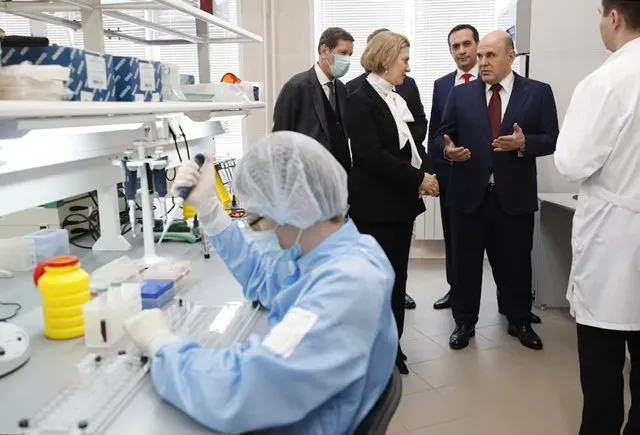
In Irkutsk, a Siberian city near Mongolia, the apparent absence of public alarm has become almost as striking as the unexplained health scare that brought the region international attention. More than a week after reports of a possible plague outbreak prompted quarantines and emergency measures, residents are going about their daily lives without masks or visible signs of a public health emergency. Yet the Russian authorities have not fully explained what happened, leaving the World Health Organization (WHO) demanding further information and creating space for speculation.
“What plague?” one resident asks incredulously. A pharmacy assistant, irritated by questions about precautions, points out that she is not wearing a mask. Two elderly women in Shelekhov, a suburb of Irkutsk that the regional governor briefly advised people to avoid because of a “particularly dangerous infection”, say they will simply follow official instructions. Their responses reflect a widespread attitude among residents: the situation is either under control or not worth worrying about, despite unanswered questions surrounding the death that triggered the alert.
The case centres on Daria Shipilova, a 28-year-old researcher at Irkutsk’s anti-plague institute, who died on 2 October. Russia’s consumer health and safety watchdog, Rospotrebnadzor, said she had died of “pneumonia of undetermined aetiology”. On 8 October, regional governor Igor Kobzev announced that quarantine measures were being lifted, saying the woman had contracted pneumonia outside hospital and that more than 5,000 tests had found no health problems associated with infectious diseases.
The announcement appeared to close the episode, but it did not resolve the questions that had prompted it. The WHO has requested further details, including the cause of Shipilova’s death. The circumstances remain unclear: why was plague mentioned by some officials, why was an emergency meeting convened at multiple levels of government, and why were hundreds of people placed under observation?
The lack of transparency has encouraged alternative explanations. Elena Trifonova, editor-in-chief of the local newspaper Liudi Baikala, told EL PAÍS that inspections of veterinary clinics could point to a possible infection transmitted by animals. An employee at a veterinary clinic in nearby Angarsk reported a “plague inspection” on the Thursday before the article was published. Trifonova said the inspections suggested that authorities were monitoring possible animal-related risks, even though they had not formally declared the alert over.
The possibility has a recent precedent. Earlier in the year, Russian authorities ordered mass livestock culls in several regions, including Irkutsk, giving farmers little explanation beyond the phrase “particularly dangerous infection”. Suspicions centred on outbreaks of foot-and-mouth disease. Trifonova argued that acknowledging the disease could have required border closures and bans on meat and milk sales, with substantial economic and reputational consequences. She described the concealment of information as a recurring feature of Russia’s political system.
Despite the lifting of quarantine, some hospitals continue to restrict access. A notice at Irkutsk’s Hospital No. 3 limits visits to admitted patients, while another cites a decree dated 2 October imposing restrictions during the 2026–27 flu, acute respiratory infection and new Covid season. Nearby, however, pharmacies and streets appear largely unaffected. Residents say they have not seen widespread mask-wearing or panic buying, although a survey of 15 pharmacies conducted by Liudi Baikala early in the crisis found that some had run out of antibiotics. A pharmacy worker said mask sales had increased, attributing the trend to the approaching flu season and habits acquired during the Covid pandemic.
Conflicting accounts have filled the information vacuum. Some residents dismiss the possibility of plague, while others repeat unverified claims that Shipilova broke a laboratory vial or died of cardiac arrest. One man invoked the “Overton window”, incorrectly describing it as a mechanism for creating an absurd concept and surrounding it with rumours. Others blame foreign actors for spreading misinformation, without offering evidence. The governor’s recommendation to avoid Shelekhov was subsequently deleted, adding another source of confusion.
For some residents, the crisis has been overshadowed by a more visible reality: Russia’s war in Ukraine. In Irkutsk, recruitment posters promise large salaries, while funeral homes display gravestones across neighbourhoods. According to an open-source tally by the independent outlet Mediazona, at least 6,859 people from Irkutsk have died in the invasion, a figure believed to underestimate the actual toll. The region’s Belaya air base was also targeted during Ukraine’s Operation Spiderweb in 2025.
The region’s proximity to Mongolia adds another dimension to the health concerns. Mongolia reported a death from bubonic plague in 2023 after a person ate infected marmot meat, and recorded other cases during the Covid period. According to the WHO, around 10 countries, including the United States and China, reported 423 plague deaths and nearly 4,000 cases between 2019 and 2025. Those figures are far smaller than the global toll of Covid-19.
Residents remember the coronavirus pandemic as a period of severe illness and widespread death. Russian restrictions were comparatively limited, with lockdown measures lasting only weeks and mask rules loosely enforced. The US National Institutes of Health estimated that excess mortality in Russia exceeded one million people in 2020 and 2021.
For now, everyday life in Irkutsk continues with little visible sign of a plague emergency. But the unresolved questions surrounding Shipilova’s death, the veterinary inspections and the authorities’ initial response remain. As residents defer to official statements or circulate competing theories, the WHO is still seeking the information needed to establish what happened.

Sri Lanka Guardian
The Sri Lanka Guardian is an online web portal founded in August 2007 by a group of concerned Sri Lankan citizens including journalists, activists, academics and retired civil servants. We are independent and non-profit. Email: [email protected]
Leave a Reply Cancel reply
Latest from Blog
India’s Democracy Behind Barricades
New Delhi was placed under extensive security restrictions on 10 October as authorities moved to prevent
Ancient DNA Discovered on Cave Walls Opens New Window into Prehistoric Human Life
Human DNA can survive for thousands of years on the walls of prehistoric caves, even where
Poland’s Welcome to Ukrainian Refugees Gives Way to Rising Hostility
Poland’s public mood towards Ukrainian refugees has shifted sharply since Russia launched its full-scale invasion in
Western Sahara Dispute Returns to UN as Guterres Insists on Sahrawi Self-Determination
Morocco’s efforts to secure international backing for its proposed autonomy plan for Western Sahara face a
The Devils: Restored Ken Russell Film Revives a Censored Vision of Religious Power
Ken Russell’s The Devils, a controversial 1971 film about religious persecution, political power and alleged demonic
Afghan Women Face Risk of International Acceptance of Taliban Rule, Legal Expert Warns
The international community risks becoming accustomed to the systematic exclusion of millions of Afghan women and
Australia Approves Major Coal Mine Extension Despite Climate Commitments
Australia has approved an extension of one of its largest coal mining complexes, allowing Hunter Valley
Thailand plans early retirement scheme to cut civil service workforce by 5% annually
Thailand plans to introduce an early retirement programme for civil servants as part of efforts to
Sri Lanka’s Ex-President Reportedly Admitted to ICU as Wife and Son Face Corruption Cases
by Our Correspondent in Colombo Former Sri Lankan president Mahinda Rajapaksa has reportedly been admitted to
Independent AI Safety Evaluators Gain Prominence as Tech Giants Face Pressure Over Risks
Independent artificial intelligence safety evaluators are gaining prominence as leading technology companies face growing pressure to
Full text reproduced from slguardian.org (publisher page, rights-checked under syndication).
View original at slguardian.orgAbout this report
Original title: Plague, Secrecy and Suspicion: Inside Russia's Unexplained Siberian Health Scare – Sri Lanka Guardian